History 1/3

The early days of the monastery

Rétrospective(s)

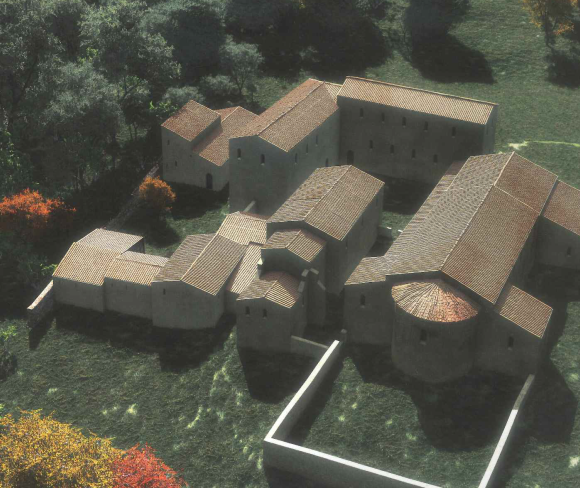
Archaeological excavations show that the site of Romainmôtier was inhabited from the dawn of the Christian era. Remnants of building foundations have been uncovered close to the Nozon River.

The vestiges of the first monastery date back to the middle of the 5th century.

The first church is thought to have been built by monks from the French Jura, including Romanus. The site fulfilled their wish for isolation while being close to the thoroughfares crossing the Jura. Saint Romanus of Condat is considered one of the fathers of the Jura. He actively spread the Christian faith in the region.

At this time, Romainmôtier was part of the Kingdom of Burgundy. In 515 AD, King Sigismund founded the Abbey of Saint Maurice at Agaunum (in Valais) and invited monks from the Jura to become part of the community there.
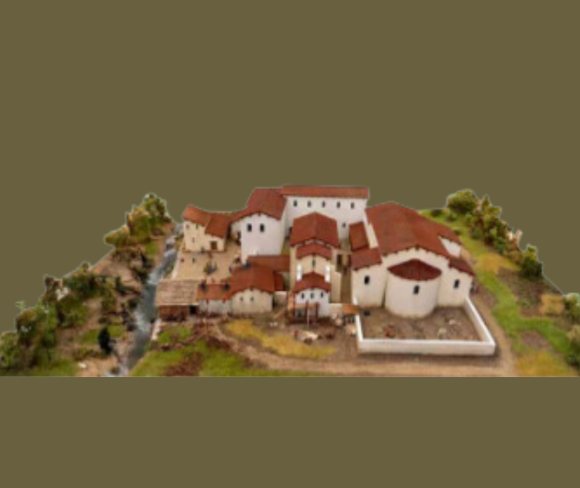
In the early 7th century, Duke Chramelenus of Burgundy carried out a reform of the monastery, modernising the buildings and establishing the Irish monastic rule of Saint Columbanus, which was spreading across Western Europe.

In subsequent centuries, the monastic community of Romainmôtier adopted the Rule of Saint Benedict. It embarked on important transformations, such as the construction of a second church. The layout of the buildings indicated a monastic organisation that was cut off from the outside world.

The ambo, at the entrance to the choir, is evidence of liturgical life at the time. It was used as a pulpit for the reading of the Gospels.

DR

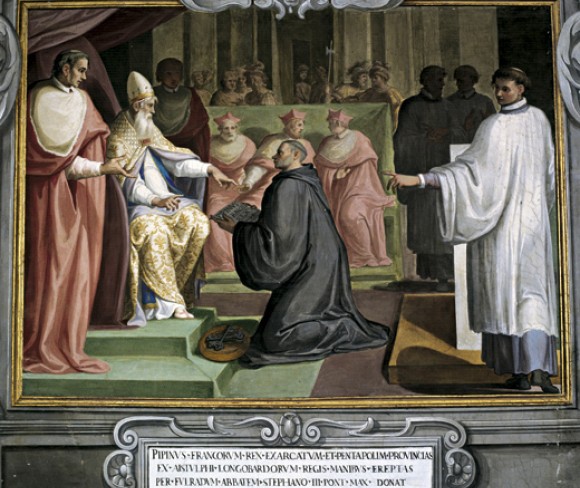
In the middle of the winter of 753-754, Pope Stephen II set off to cross the Great Saint Bernard Pass – and much of Europe – towards Saint-Denis to ask Pepin the Short, King of the Franks, for protection.

On his way, he is thought to have stopped at the monastery in Romainmôtier and placed the abbey church under his protection.

The reason we say ‘thought to’ is because the historical sources in question were written long after the event and are somewhat unreliable.

In July of 754, he anointed Pepin and his sons Carloman and Charles (the future Charlemagne), thereby legitimising the Carolingian dynasty over the Merovingians. Pope Stephen II returned to Italy accompanied by Pepin and his troops. After the siege of Pavia and the victory against the Lombards, Pepin gifted the Pope the reconquered territories around the area known as ‘Vatican Hill’, where the Papal States were then established.