History 2/3

The Cluniac golden age

Jean-Baptiste Lallemand

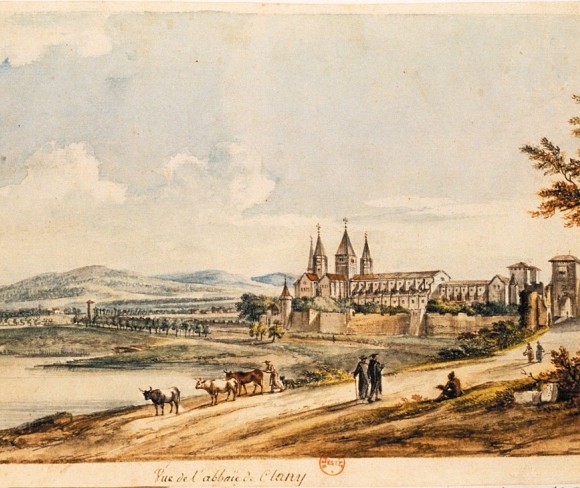
In 928, Adelaide, wife of the Duke of Burgundy and owner of the abbey in Romainmôtier, bequeathed it to the burgeoning Cluny Abbey, but the change of ownership never actually took place. Romainmôtier was only handed over to the Abbot Majolus of Cluny in the late 10th century.

The 10th and 11th centuries were marked by the struggle over land waged by the monks and noble families from the region, as each sought to expand their territory at the other’s expense. In September 1050, Pope Leo IX held a synod in Romainmôtier. He threatened to excommunicate the Lords of Grandson, who had seized control of the abbey and its lands.
In the late 13th century, a part of the church, cloister and adjacent buildings were ravaged by two fires, probably due to lightning. Important restoration work in the Gothic style was undertaken, changing the architecture of the monastery. The church and the Prior’s House were embellished with vaults, murals, sculptures and stalls.

Of the 43 priors who occupied it until the 16th century, some stand out. Henri de Sévery, Jean de Seyssel and Jean de Juys played a key role in the reconstruction and development of the site.

The monastery subsequently fell into the hands of the House of Savoy and its role diminished. The wedding of Philibert II, Duke of Savoy, to Margaret of Austria was celebrated there in 1501.

MET

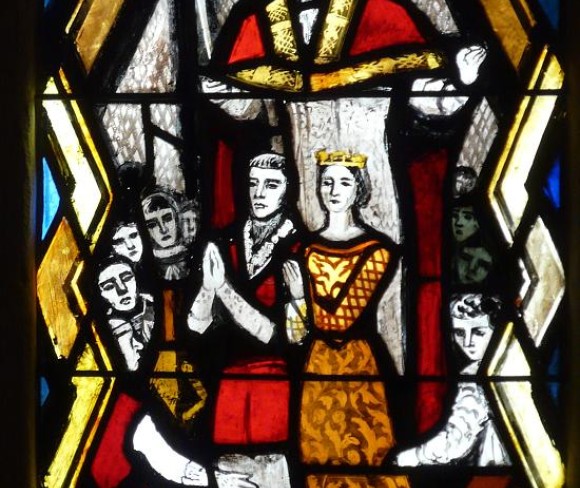
On 1 December 1501, Margaret of Austria married Philibert II, Duke of Savoy, at the abbey church in Romainmôtier.

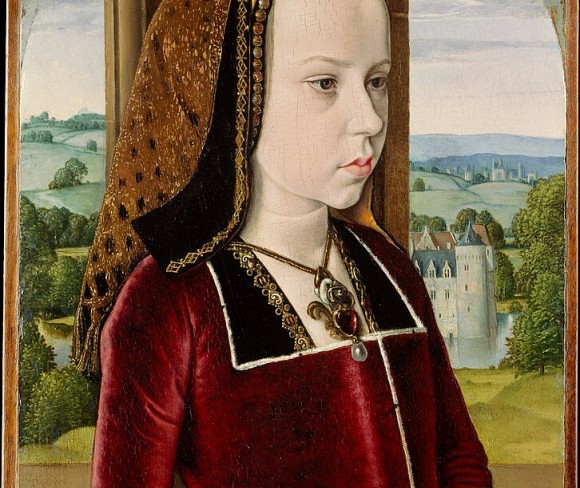
Although she was only 21, the daughter of Holy Roman Emperor Maximilian I was marrying for the third time. As a child, she had been betrothed to the dauphin (later Charles VIII of France), but he later repudiated her for political reasons. She then married John, Prince of Asturias, but was widowed just six months later. Looking for a new match and to enter into an advantageous union for the Habsburgs, her father arranged for her to marry Philibert II, Duke of Savoy.

The couple met for the first time in Romainmôtier. After a banquet and ball, they were wedded by Louis de Gorrevod, Bishop of Maurienne. They then spent their wedding night in the Prior’s House. The location may have been chosen due to the fact that the Priory of Romainmôtier was the first monastery on the Duke’s land when travelling from the direction of Franche-Comté. It is also worth mentioning that the prior, Michel of Savoy, was Philibert’s bastard half-brother and that Philibert wanted Margaret to become Duchess of Savoy when she came to Geneva.

It seems that the marriage was happy, although short-lived. In 1504, Margaret found herself a widow again. Margaret of Austria (1480–1530) – Duchess of Savoy and later Governor of the Netherlands – was a wealthy and well-educated woman, a powerful political figure and a major patron of the Renaissance. She also raised her nephew, the future Emperor Charles V.